- Events
-
Partners
- Government
- Customer Portal
- Contact Us
- Contact Sales
-
English
SolarWinds® Server & Application Monitor (SAM) is built with out-of-the-box web server monitoring tools for websites and web applications. Built-in dashboards can allow you to immediately start monitoring the availability and performance of websites and application pools. SAM can provide critical performance metrics like application pools, worker processes, cache requests, threads, sites, connections, files, requests, and more.
Slow website load times are usually caused by database issues, with slow running queries as the typical root cause. Keep load time quick to ensure end users can use your websites. The SAM web server monitoring tool is designed to provide data on the query processing time along with the time spent waiting on server resources. This can help you pinpoint if a response issue is caused by a lack of server resources, or if it’s the database query taking longer to execute.
SAM can allow you to effectively monitor web servers and website load, and understand key performance statistics, including CPU utilization, memory usage, network traffic, disk capacity, and the number of user connections. SAM can also provide deep visibility on web server load by monitoring essential web server performance metrics. To help balance server load and resource allocation, you can view client connections, web server traffic and status, incoming sessions, data downloaded or uploaded, and more.
Web server performance metrics can be used to identify issues with server hardware, virtual infrastructure, and network or storage performance issues. Being able to see the relationships between your web server dependencies helps you find and remediate problems much faster. With SAM, you can drill deep to see whether a physical server, a virtual host, or guest is triggering issues potentially impacting website or web application performance on the front end.
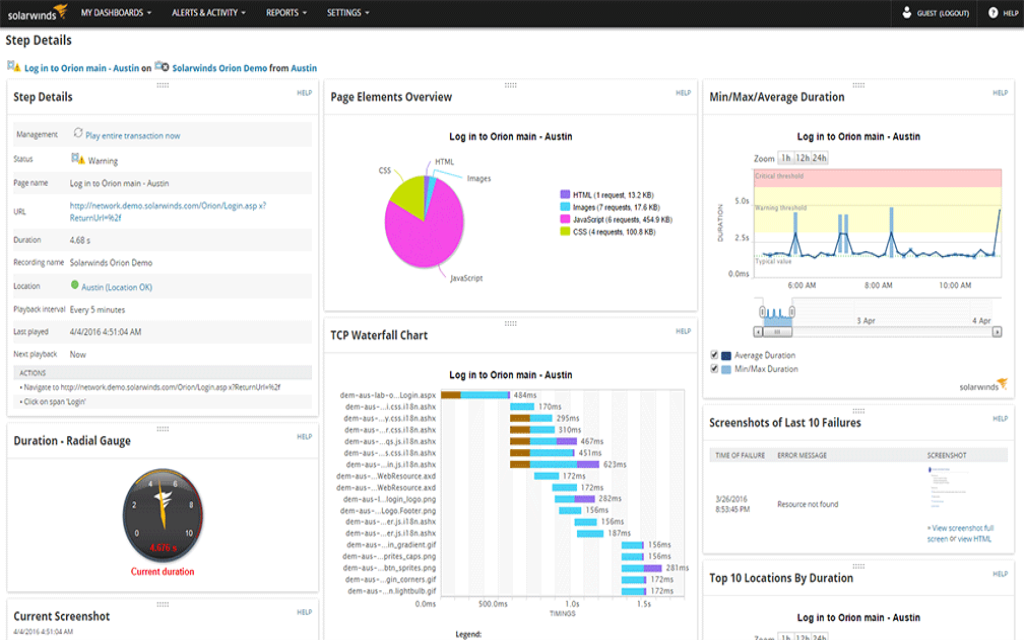
SAM is built to provide broad coverage to track web server performance. SAM can also be integrated with SolarWinds Web Performance Monitor, so you can monitor the availability and performance of websites by recording and playing back synthetic end-user transactions. SAM can allow you to securely test and monitor web application and website performance, identify and diagnose response time for web page elements, and monitor website and user experience from multiple locations.
Web server monitoring refers to tracking the health, metrics, and performance of your web servers, so you can ensure high-level functioning. By keeping tabs on vital web server performance metrics, network administrators are better able to identify and prevent problems before they can impact end users.
Web servers host the applications, services, and sites we access online every day. As cloud computing becomes the norm, more services and applications are shifting to online spaces, meaning monitoring web servers will only become more essential to ensure the reliability and accessibility of networked interactions between clients and websites.
The primary goal of monitoring web server performance is to protect the server from potential failure. Web server monitoring tools assist in this process by collecting certain performance metrics from each server, which can then be used to determine the overall health and performance of the device.
There are two kinds of metrics web server monitoring tools track: connection metrics and host metrics. Connection metrics relate to the status of the connections between the server and users, including:
Host metrics, on the other hand, track the health of the devices hosting the web servers, and include:
Web server monitoring should also include metrics like user load, security status, and overall performance speed.
Web server monitoring is important because it enables availability and scalability for your online resources, which supports business function as well.
All end-user requests for content are handled by web servers, which makes web server monitoring an essential part of ensuring the function and efficiency of applications and services a company requires for everyday business operations. Slow servers can directly impact a company’s finances, as end users are quick to leave slow web pages. Web server monitoring tools are designed to detect errors and failures and send alerts to network administrators, so potential server downtime can be averted.
Web server monitoring also provides insights regarding the popularity and changes in traffic for various websites, applications, and services. Tracking data like site activity and session duration can be valuable for organizations looking to expand their sites, streamline the functionality of their applications, or incorporate additional services to meet the demands of increased traffic.
Web server monitoring tools include a range of features to automatically provide network administrators with critical, actionable insights into the performance trends of all web servers within a given IT infrastructure.
Automated tools can pair real-time monitoring with historical records of metric data to allow admins to quickly determine precisely when unusual or concerning events or behavior occurred, and on which devices.
Web server performance monitoring tools have alerting systems to keep IT support staff and all necessary players up to date regarding potential resource shortages and other server issues.
Web server monitoring tools offer dashboards and reports allowing you to quickly view current performance metrics or analyze web server performance metrics over periods of time.
SAM includes robust web server performance monitoring tools designed to give you the ability to detect and resolve issues and potential problems before they affect the end-user experience.
SAM also comes with more than 1,200 monitoring templates designed to help you efficiently monitor your web server assets and generate intuitive reports when the application is up and running.
In addition, SAM’s intelligent alerting system can help weed out false positives and keep you notified when web server performance metrics reach warning and critical levels, allowing you to quickly respond when resources are low.
SAM can also be used to optimize common application performance management processes, which can be tedious or time-consuming to perform manually, saving you time and allowing you to devote your attention to more critical tasks and concerns. SAM can also automatically discover and create maps of servers, applications, and nodes, for improved system oversight.
SAM can also use synthetic transaction monitoring to test and identify whether any alterations made to the code of web pages and applications will affect the end-user experience prior to going live. This can allow you to proactively detect and resolve performance issues before they cause trouble.
Web server monitoring refers to tracking the health, metrics, and performance of your web servers, so you can ensure high-level functioning. By keeping tabs on vital web server performance metrics, network administrators are better able to identify and prevent problems before they can impact end users.
Web servers host the applications, services, and sites we access online every day. As cloud computing becomes the norm, more services and applications are shifting to online spaces, meaning monitoring web servers will only become more essential to ensure the reliability and accessibility of networked interactions between clients and websites.
The primary goal of monitoring web server performance is to protect the server from potential failure. Web server monitoring tools assist in this process by collecting certain performance metrics from each server, which can then be used to determine the overall health and performance of the device.
There are two kinds of metrics web server monitoring tools track: connection metrics and host metrics. Connection metrics relate to the status of the connections between the server and users, including:
Host metrics, on the other hand, track the health of the devices hosting the web servers, and include:
Web server monitoring should also include metrics like user load, security status, and overall performance speed.
Web server monitoring is important because it enables availability and scalability for your online resources, which supports business function as well.
All end-user requests for content are handled by web servers, which makes web server monitoring an essential part of ensuring the function and efficiency of applications and services a company requires for everyday business operations. Slow servers can directly impact a company’s finances, as end users are quick to leave slow web pages. Web server monitoring tools are designed to detect errors and failures and send alerts to network administrators, so potential server downtime can be averted.
Web server monitoring also provides insights regarding the popularity and changes in traffic for various websites, applications, and services. Tracking data like site activity and session duration can be valuable for organizations looking to expand their sites, streamline the functionality of their applications, or incorporate additional services to meet the demands of increased traffic.
Web server monitoring tools include a range of features to automatically provide network administrators with critical, actionable insights into the performance trends of all web servers within a given IT infrastructure.
Automated tools can pair real-time monitoring with historical records of metric data to allow admins to quickly determine precisely when unusual or concerning events or behavior occurred, and on which devices.
Web server performance monitoring tools have alerting systems to keep IT support staff and all necessary players up to date regarding potential resource shortages and other server issues.
Web server monitoring tools offer dashboards and reports allowing you to quickly view current performance metrics or analyze web server performance metrics over periods of time.
SAM includes robust web server performance monitoring tools designed to give you the ability to detect and resolve issues and potential problems before they affect the end-user experience.
SAM also comes with more than 1,200 monitoring templates designed to help you efficiently monitor your web server assets and generate intuitive reports when the application is up and running.
In addition, SAM’s intelligent alerting system can help weed out false positives and keep you notified when web server performance metrics reach warning and critical levels, allowing you to quickly respond when resources are low.
SAM can also be used to optimize common application performance management processes, which can be tedious or time-consuming to perform manually, saving you time and allowing you to devote your attention to more critical tasks and concerns. SAM can also automatically discover and create maps of servers, applications, and nodes, for improved system oversight.
SAM can also use synthetic transaction monitoring to test and identify whether any alterations made to the code of web pages and applications will affect the end-user experience prior to going live. This can allow you to proactively detect and resolve performance issues before they cause trouble.
Server & Application Monitor
Leverage out-of-the-box capabilities for web server monitoring
Obtain performance trends to optimize your web server infrastructure
Proactively get alerted on web server issues before end users experience slowdowns