- Events
-
Partners
- Government
- Customer Portal
- Contact Us
- Contact Sales
-
English

Data is the fuel driving business success. It's the foundation ensuring applications are available and performant to meet end users' needs, it helps inform critical business decisions, and it even offers the proprietary advantage, setting organizations apart from their competition. Microsoft SQL Server and Azure SQL Database are common data platforms businesses worldwide choose to meet these challenges, and monitoring SQL database performance is critical.
Database administrators and IT pros cannot improve what's not measured. Ensuring you have the right monitoring solution to monitor the correct metrics, and provide actionable metrics, ensures you can efficiently pinpoint the root cause of a problem and helps to optimize and tune database performance to prevent future issues.
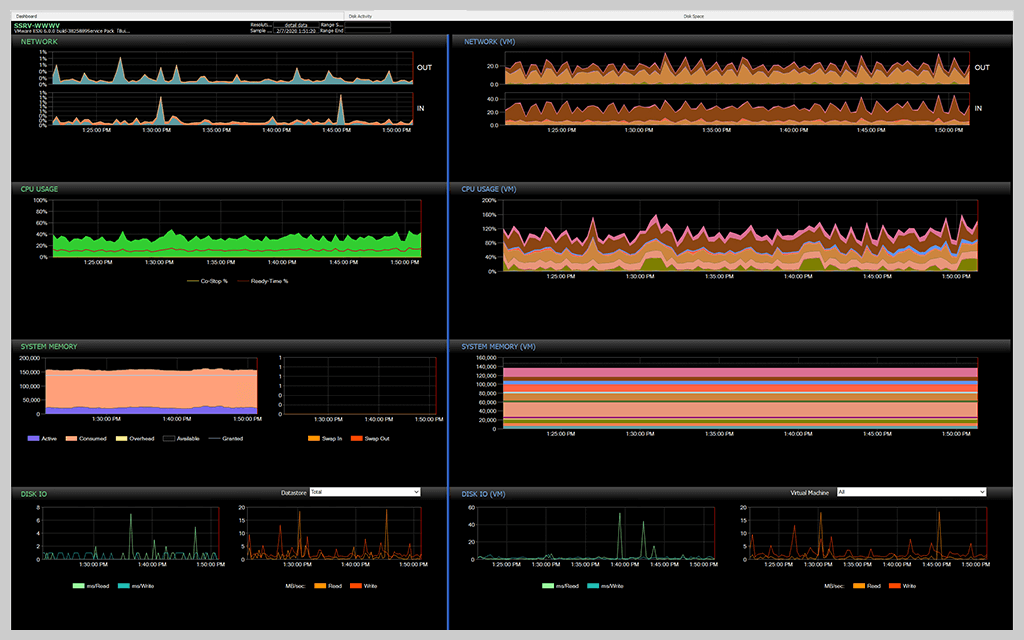
To successfully diagnose Microsoft SQL Server, you need to start by monitoring your entire data platform stack. This monitoring should include the SQL Server application, the operating system, and extend into the hypervisor host infrastructure for public, private, and hybrid clouds. Database administrators and IT departments should continuously monitor these layers. If you’re only monitoring the SQL Server instance itself, you can have blind spots in your monitoring, potentially leading to SQL Server performance and availability issues.
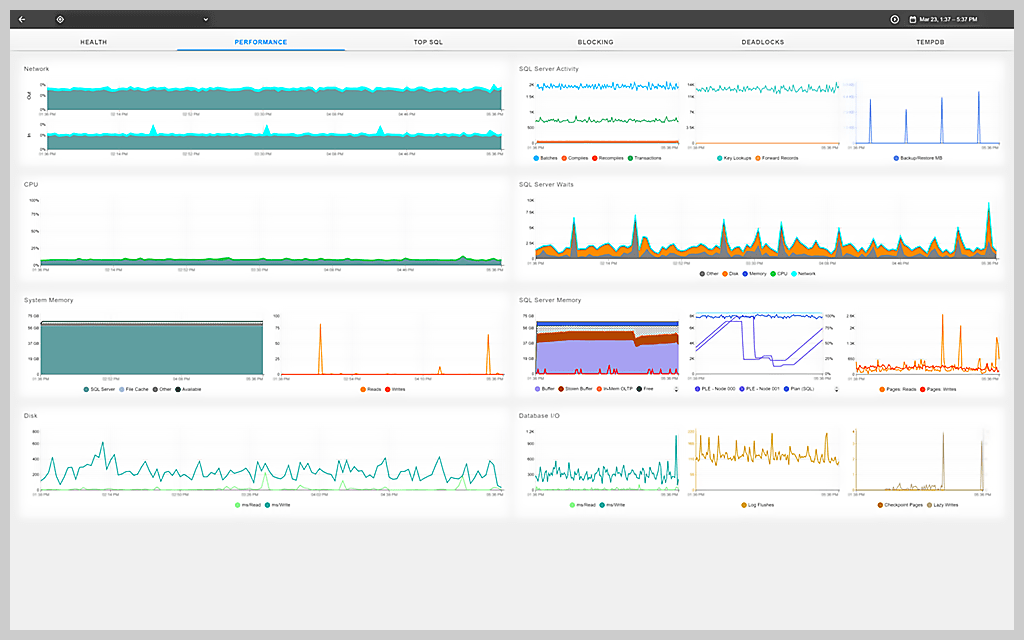
Moving up the data platform stack is the SQL Server itself. There are standard metrics that should be monitored at the hypervisor and OS layer, such as CPU, memory, and networking. There are additional metrics that need to be monitored at the operating system and application layer. Metrics such as:
Each of these metrics should be monitored and accounted for when diagnosing your SQL Server issues.