- Events
-
Partners
- Government
- Customer Portal
- Contact Us
- Contact Sales
-
English
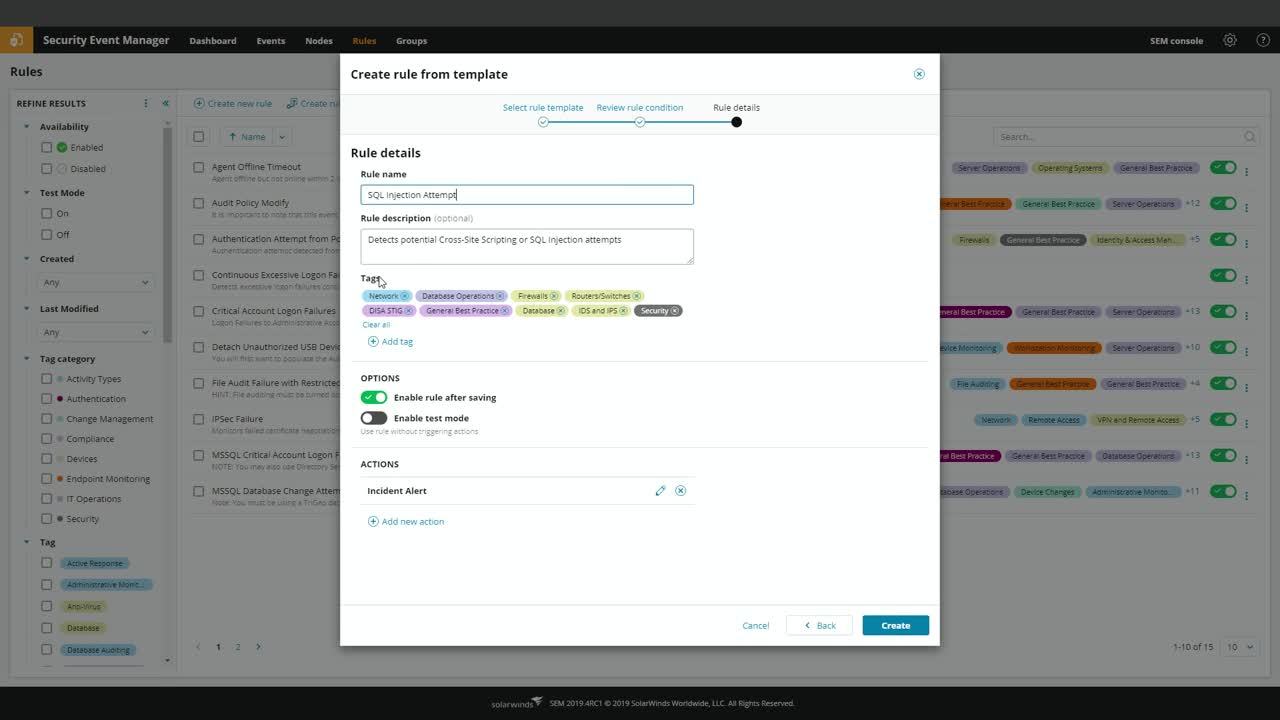
Correlation is integral to any effective SIEM tool, and the correlation manager in SolarWinds Security Event Manager (SEM) is built to identify suspicious activity, send alerts, and automatically respond to potential attacks based on a set of configurable event rules. These rules are designed to help IT teams detect and stop SQL injection attacks by using a pre-populated list of vectors commonly found in both cross-site scripting and SQL injection attacks. When these vectors appear in web application logs, SEM can alert and respond in real time with automated actions like disabling a user or stopping a process.
When experiencing a SQL injection attack, a delay in your ability to identify and respond can be disastrous as well as costly. SEM is designed to help you respond in a swift and timely manner, streamlining your use of resources to stop an attack efficiently.
As cyber-attackers attempt to navigate your SQL environments, they typically generate SQL errors—like fingerprints left behind at a crime scene. Identifying these errors is one of the best ways to detect a SQL attack while it is in progress. Security Event Manager can allow you to identify and flag SQL errors in real time.
Since it is unlikely that attackers will be familiar with the names of tables, columns, functions, or views within your databases, another symptom of a potential SQL injection attempt is a reference to system tables. Examples of these system table references in PostgreSQL are pg_table, pg_schema, or pg_stat_activity. SEM can alert on both an unusual number of SQL errors or on system table references made by non-whitelisted accounts to make you aware of suspicious activity that could signal a potential SQL injection attack.
The information a SQL injection attacker can retrieve is often limited to a single row per query due to the limitations of the original query, which is why monitoring for an unusually high offset can help businesses detect a SQL injection attack. For example, if an attacker changes "LIMIT 1 OFFSET 1" to "OFFSET 1000," SolarWinds SEM can help monitor and analyze these changes—a rule activity filter can allow you to sort through both recent and historical activity on the server that triggered the rule responses.
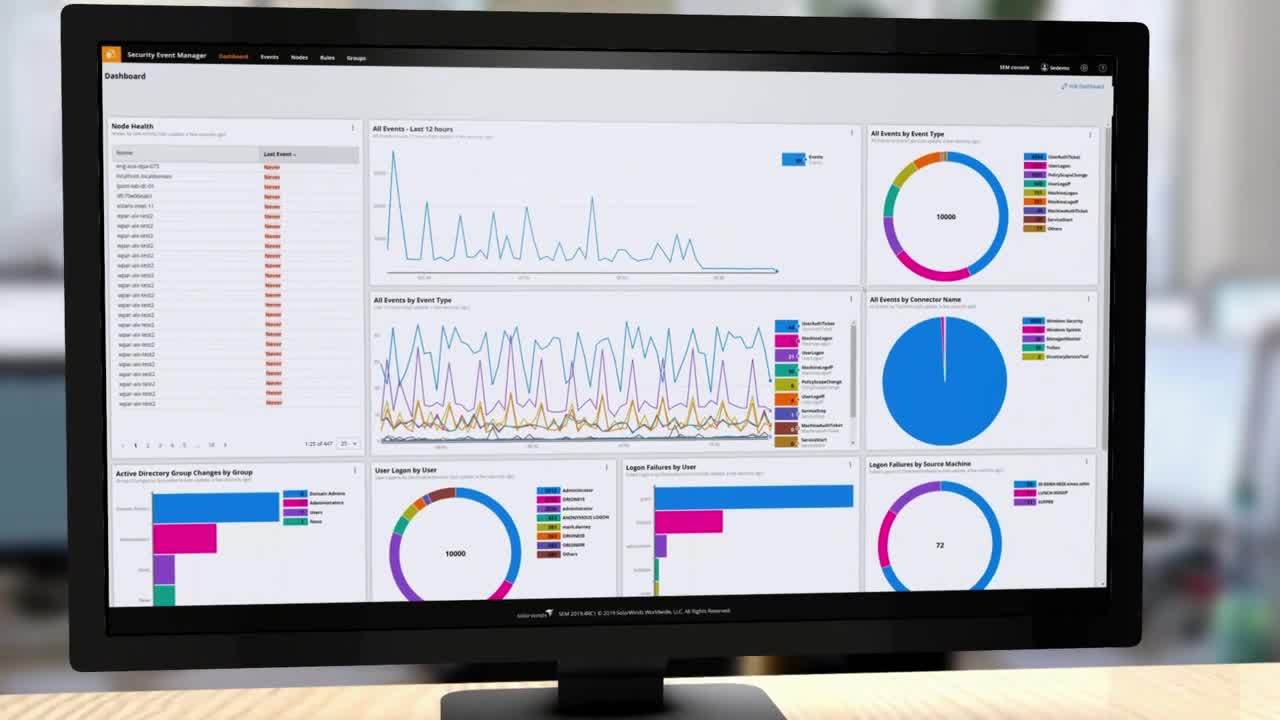
The log correlation manager feature in SEM allows you to search and sort normalized log data centrally stored within its network security monitoring system to easily locate and drill down into specific events. You can also create rules from templates or from scratch using the intuitive, built-in rule building function—and you can always customize them to suit the needs of your network and database infrastructure.
Get More on SQL Injection Attacks
A SQL injection is a common attack technique that involves placing malicious code within improperly formatted SQL queries. This can happen when users are prompted to provide credentials to access the database. However, instead of inputting a username, a hacker deploying a SQL injection attack will enter a SQL statement designed to secretly run or trick the database into thinking it is a command. If successful, a SQL injection allows attackers to access, edit, and potentially even delete a database.
A typical SQL injection attack involves two phases:
While there is no foolproof way to make your databases impenetrable to SQL injection attacks, there are several SQL injection prevention best practices you can follow to help make it harder for hackers to gain database access:
It is also helpful to monitor database logs for suspicious activity that could indicate a potential SQL injection attack—allowing you to act as quickly as possible to stop the attack and mitigate any potential damage.
Using SolarWinds SEM, you can set alerts as well as automatic responses to occur when SQL events meet configurable thresholds. Security Event Manager includes a threat intelligence feed with known bad IPs, hosts, and other threat vectors that is continuously updated from third-party sources. SEM is built to correlate this feed with log data from across your environment to help quickly detect advanced cyberthreats. When these vectors appear, SEM can respond in real time with automated actions like disabling a user or stopping a process.
Security Event Manager supports a wide variety of security assessment protocols and applications to help you maintain a secure database and protect against SQL injection attacks. When hackers access a database via SQL injection, they almost always leave behind a trail of SQL errors—which can be an early warning sign that an attack is in progress. SolarWinds SEM is designed to use real time log monitoring, pre-built SQL injection rules, alerts to keep you informed, and can disable users, processes, as well as perform other automated threat responses to help secure systems when SQL injection indicators are detected.
A SQL injection is a common attack technique that involves placing malicious code within improperly formatted SQL queries. This can happen when users are prompted to provide credentials to access the database. However, instead of inputting a username, a hacker deploying a SQL injection attack will enter a SQL statement designed to secretly run or trick the database into thinking it is a command. If successful, a SQL injection allows attackers to access, edit, and potentially even delete a database.
A typical SQL injection attack involves two phases:
While there is no foolproof way to make your databases impenetrable to SQL injection attacks, there are several SQL injection prevention best practices you can follow to help make it harder for hackers to gain database access:
It is also helpful to monitor database logs for suspicious activity that could indicate a potential SQL injection attack—allowing you to act as quickly as possible to stop the attack and mitigate any potential damage.
Using SolarWinds SEM, you can set alerts as well as automatic responses to occur when SQL events meet configurable thresholds. Security Event Manager includes a threat intelligence feed with known bad IPs, hosts, and other threat vectors that is continuously updated from third-party sources. SEM is built to correlate this feed with log data from across your environment to help quickly detect advanced cyberthreats. When these vectors appear, SEM can respond in real time with automated actions like disabling a user or stopping a process.
Security Event Manager supports a wide variety of security assessment protocols and applications to help you maintain a secure database and protect against SQL injection attacks. When hackers access a database via SQL injection, they almost always leave behind a trail of SQL errors—which can be an early warning sign that an attack is in progress. SolarWinds SEM is designed to use real time log monitoring, pre-built SQL injection rules, alerts to keep you informed, and can disable users, processes, as well as perform other automated threat responses to help secure systems when SQL injection indicators are detected.
Security Event Manager
Easily achieve auditable compliance across industry-specific IT regulatory frameworks.
Detecting and responding to security threats is critical for businesses of all sizes.
The effectiveness of your security depends on your ability to quickly respond to threats.