- Events
-
Partners
- Government
- Customer Portal
- Contact Us
- Contact Sales
-
English
Syslog management is the collection, analysis, and storing of syslog messages from throughout your network. These logs contain essential information about your network device’s activity, performance, status, and security. Analyzing this data in real time enables you to reduce system downtime, strengthen security policies, and enhance the overall performance of your IT environment. In short, syslog management helps you execute the best possible strategies for your enterprise network.
Syslog management tools are designed to perform syslog collection, retention, indexing, and organization, as well as support other features like reporting and search capabilities. These efforts further your ability to understand the performance of devices such as routers, switches, firewalls, and servers across your network. Many syslog management software support centralized syslog management to improve data accessibility.
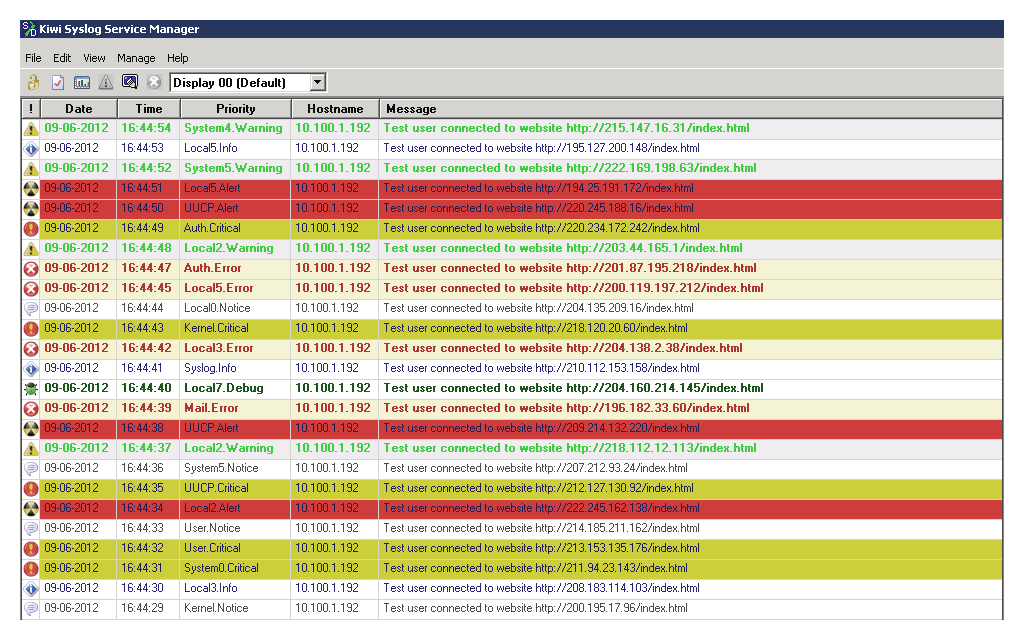
Syslog monitoring is an element of syslog management, focused on receiving and examining syslog messages via monitored network devices. With centralized syslog monitoring software, you can store large amounts of syslog data and easily search through the database to find necessary information.
Some elements of syslog monitoring include:
A large element of syslog monitoring is creating alarms and reports. Syslog alerting enables you to instantly know when specific patterns are detected in log data, so you can quickly investigate potential performance issues. Reports of syslog issues, as well as compliance reports, are also designed to simplify the auditing and analysis of your network.
The benefits include the following:
Syslog data organization: Keeping your syslog data organized through syslog monitoring and management enables you to easily detect inconsistencies in log data. Syslog reporting, monitoring, and management are designed to help you stay on top of your syslog data and quickly pinpoint strange variations. Syslog monitoring also enables you to collect data for further pattern detection.
Threat detection: These tools enable you to discover network infrastructure problems such as outages, failures, availability limits, and more.
Ease of use: Syslog management and monitoring software is built on centralized platforms, enabling you to easily access syslog data. This can expedite troubleshooting efforts by letting you easily isolate and identify syslog messages.
Reduce costs: The benefits of syslog monitoring and management boil down to reducing the time, money, and energy it takes to analyze your syslog data. By detecting issues, structuring data the right tools could help you spend your time wisely, and prevent performance issues.
Kiwi Syslog Server is designed to safely receive, compress, and transport syslog messages from across network devices. Kiwi Syslog Server is also built to handle up to two million messages per hour from both IPv4 and IPv6 devices.
Kiwi Syslog Server enables centralized syslog management through an easy-to-use web console. The Kiwi Syslog Server platform is designed to leverage syslog retention and archival systems that meet SOX, PCI-DSS, FISMA, and other regulations in order to maintain compliance. Kiwi Syslog Server automatically creates an error log you can use for troubleshooting, and you could also schedule server log archival and cleanup.
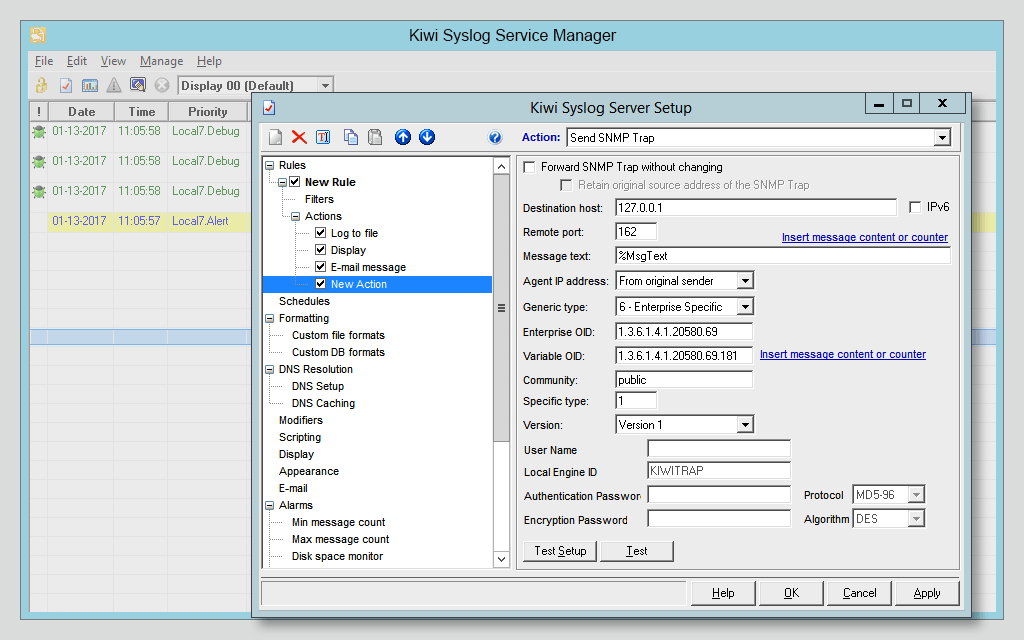
Along with scheduling log archival and cleanup, Kiwi Syslog Server enables you to create scheduled tasks, alarms, and scripted actions, including running external programs. You could even trigger email notifications and reports with help from Kiwi Syslog Server to help you stay on top of syslog management and monitoring efforts. Configure email options before adding an action to send email, and configure input options so Kiwi Syslog Server can collect syslogs using your standard protocol.
There are a number of other built-in actions that Kiwi Syslog Server enables you to access. These include:
Syslog management is the collection, analysis, and storing of syslog messages from throughout your network. These logs contain essential information about your network device’s activity, performance, status, and security. Analyzing this data in real time enables you to reduce system downtime, strengthen security policies, and enhance the overall performance of your IT environment. In short, syslog management helps you execute the best possible strategies for your enterprise network.
Syslog management tools are designed to perform syslog collection, retention, indexing, and organization, as well as support other features like reporting and search capabilities. These efforts further your ability to understand the performance of devices such as routers, switches, firewalls, and servers across your network. Many syslog management software support centralized syslog management to improve data accessibility.
Syslog monitoring is an element of syslog management, focused on receiving and examining syslog messages via monitored network devices. With centralized syslog monitoring software, you can store large amounts of syslog data and easily search through the database to find necessary information.
Some elements of syslog monitoring include:
A large element of syslog monitoring is creating alarms and reports. Syslog alerting enables you to instantly know when specific patterns are detected in log data, so you can quickly investigate potential performance issues. Reports of syslog issues, as well as compliance reports, are also designed to simplify the auditing and analysis of your network.
The benefits include the following:
Syslog data organization: Keeping your syslog data organized through syslog monitoring and management enables you to easily detect inconsistencies in log data. Syslog reporting, monitoring, and management are designed to help you stay on top of your syslog data and quickly pinpoint strange variations. Syslog monitoring also enables you to collect data for further pattern detection.
Threat detection: These tools enable you to discover network infrastructure problems such as outages, failures, availability limits, and more.
Ease of use: Syslog management and monitoring software is built on centralized platforms, enabling you to easily access syslog data. This can expedite troubleshooting efforts by letting you easily isolate and identify syslog messages.
Reduce costs: The benefits of syslog monitoring and management boil down to reducing the time, money, and energy it takes to analyze your syslog data. By detecting issues, structuring data the right tools could help you spend your time wisely, and prevent performance issues.
Kiwi Syslog Server is designed to safely receive, compress, and transport syslog messages from across network devices. Kiwi Syslog Server is also built to handle up to two million messages per hour from both IPv4 and IPv6 devices.
Kiwi Syslog Server enables centralized syslog management through an easy-to-use web console. The Kiwi Syslog Server platform is designed to leverage syslog retention and archival systems that meet SOX, PCI-DSS, FISMA, and other regulations in order to maintain compliance. Kiwi Syslog Server automatically creates an error log you can use for troubleshooting, and you could also schedule server log archival and cleanup.
Along with scheduling log archival and cleanup, Kiwi Syslog Server enables you to create scheduled tasks, alarms, and scripted actions, including running external programs. You could even trigger email notifications and reports with help from Kiwi Syslog Server to help you stay on top of syslog management and monitoring efforts. Configure email options before adding an action to send email, and configure input options so Kiwi Syslog Server can collect syslogs using your standard protocol.
There are a number of other built-in actions that Kiwi Syslog Server enables you to access. These include:
Kiwi Syslog Server
Real-time, always accessible syslog manager and syslog message monitoring
Centralized and easy-to-use syslog management platform that supports alerts and notifications
Actions such as store, archive, filter, and buffer can aid server log monitoring and management