- Events
-
Partners
- Government
- Customer Portal
- Contact Us
- Contact Sales
-
English
The Network Insight™ feature in NCM can help you drill down on complex devices like Cisco Nexus switches. This network infrastructure management software helps reveal performance issues like failed switches, which NCM can also help you resolve.
Sometimes, the quickest way to repair a failed switch is to replace it. NCM can take a replacement configuration from a repository of successful configs and upload it to the new device. All changes can then be easily verified by comparing the new config to the established baseline.
The term “network infrastructure” refers to the hardware and software resources comprising an enterprise’s network, plus the network’s services. Having an organized network infrastructure enables network connectivity and increases operational efficiency. Since the network infrastructure is interconnected, it also provides a stable communication network between users, applications, servers, processes, services, external networks, and the internet.
The standard network infrastructure has three tiers:
According to the International Organization for Standardization (ISO), network infrastructure management can be broken down into five major categories. They are referred to as “FCAPS.”
Network infrastructure management is the process of managing an enterprise’s infrastructure and the essential operations performed by it to ensure optimal performance.
Other goals of network infrastructure management include:These processes can ensure an enterprise is set up in a logical and efficient way, which is essential to keeping business-critical operations online and running smoothly.
Network infrastructure management should not be confused with network monitoring. Network monitoring software passively monitors your network. For example, a network monitoring tool will send out an alert that performance issues have been detected in your network and direct you to which components need to be addressed.
Network infrastructure management software, on the other hand, actively performs actions in the network, like backups or updates. For best results, admins should combine network monitoring software with network infrastructure management systems.
When it comes to creating an efficient, manageable network, admins have two options: centralized network infrastructure management and decentralized network infrastructure management.
In a centralized network, the network is built around a single server handling most of the network’s processing needs while smaller workstations handle applications, data storage, and utility requests. With only one server, it’s easier to keep a network patched and compliant, and it’s affordable. However, if the central server goes down, then the entire network goes down. Also, if you try to scale your enterprise by adding more storage, bandwidth, and processing power, you will likely find these added costs negate a centralized network’s initial cost-effectiveness.
In a decentralized network, processing needs are evenly distributed across multiple workstations. This configuration is flexible, easier to compute with, and allows admins to cut down on operating costs by only paying for the equipment they really need. However, since data passes through multiple endpoints, compliance can be a challenge with this approach. It’s also more expensive to add and maintain machines in a decentralized network. No one approach is better than the other, and most enterprises use a combination of centralized and decentralized network infrastructure management to best manage their networks.
There are many ways to go about accomplishing these goals, depending on the size and complexity of your network. You can start by following these network infrastructure management best practices:
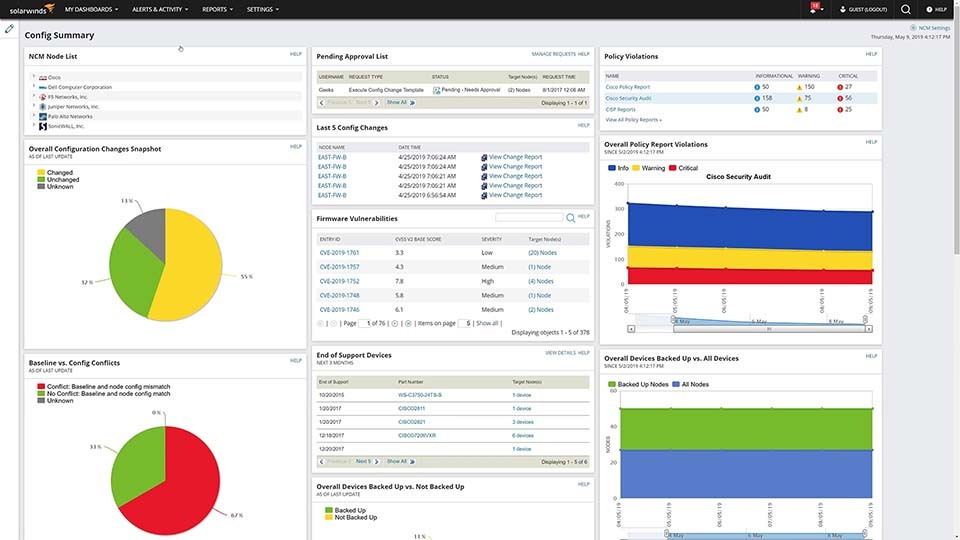
Network infrastructure management might sound daunting at first, but it doesn’t have to be difficult. An enterprise-grade network infrastructure management system like SolarWinds Network Configuration Manager can help automate time-consuming processes and improve control over your network configs.
The term “network infrastructure” refers to the hardware and software resources comprising an enterprise’s network, plus the network’s services. Having an organized network infrastructure enables network connectivity and increases operational efficiency. Since the network infrastructure is interconnected, it also provides a stable communication network between users, applications, servers, processes, services, external networks, and the internet.
The standard network infrastructure has three tiers:
According to the International Organization for Standardization (ISO), network infrastructure management can be broken down into five major categories. They are referred to as “FCAPS.”
Network infrastructure management is the process of managing an enterprise’s infrastructure and the essential operations performed by it to ensure optimal performance.
Other goals of network infrastructure management include:These processes can ensure an enterprise is set up in a logical and efficient way, which is essential to keeping business-critical operations online and running smoothly.
Network infrastructure management should not be confused with network monitoring. Network monitoring software passively monitors your network. For example, a network monitoring tool will send out an alert that performance issues have been detected in your network and direct you to which components need to be addressed.
Network infrastructure management software, on the other hand, actively performs actions in the network, like backups or updates. For best results, admins should combine network monitoring software with network infrastructure management systems.
When it comes to creating an efficient, manageable network, admins have two options: centralized network infrastructure management and decentralized network infrastructure management.
In a centralized network, the network is built around a single server handling most of the network’s processing needs while smaller workstations handle applications, data storage, and utility requests. With only one server, it’s easier to keep a network patched and compliant, and it’s affordable. However, if the central server goes down, then the entire network goes down. Also, if you try to scale your enterprise by adding more storage, bandwidth, and processing power, you will likely find these added costs negate a centralized network’s initial cost-effectiveness.
In a decentralized network, processing needs are evenly distributed across multiple workstations. This configuration is flexible, easier to compute with, and allows admins to cut down on operating costs by only paying for the equipment they really need. However, since data passes through multiple endpoints, compliance can be a challenge with this approach. It’s also more expensive to add and maintain machines in a decentralized network. No one approach is better than the other, and most enterprises use a combination of centralized and decentralized network infrastructure management to best manage their networks.
There are many ways to go about accomplishing these goals, depending on the size and complexity of your network. You can start by following these network infrastructure management best practices:
Network infrastructure management might sound daunting at first, but it doesn’t have to be difficult. An enterprise-grade network infrastructure management system like SolarWinds Network Configuration Manager can help automate time-consuming processes and improve control over your network configs.
Network Configuration Manager
Use automated configuration backup and restore to help ensure you never lose a previous configuration.
Manage unauthorized configuration changes by constantly monitoring network infrastructure.
Speed up compliance reporting with out-of-the-box assessments.