- Events
-
Partners
- Government
- Customer Portal
- Contact Us
- Contact Sales
-
English
Configuration changes can be daily events in dynamic, multi-vendor networks. However, you need a way to monitor and track changes even if you don’t immediately see the impact of the change.
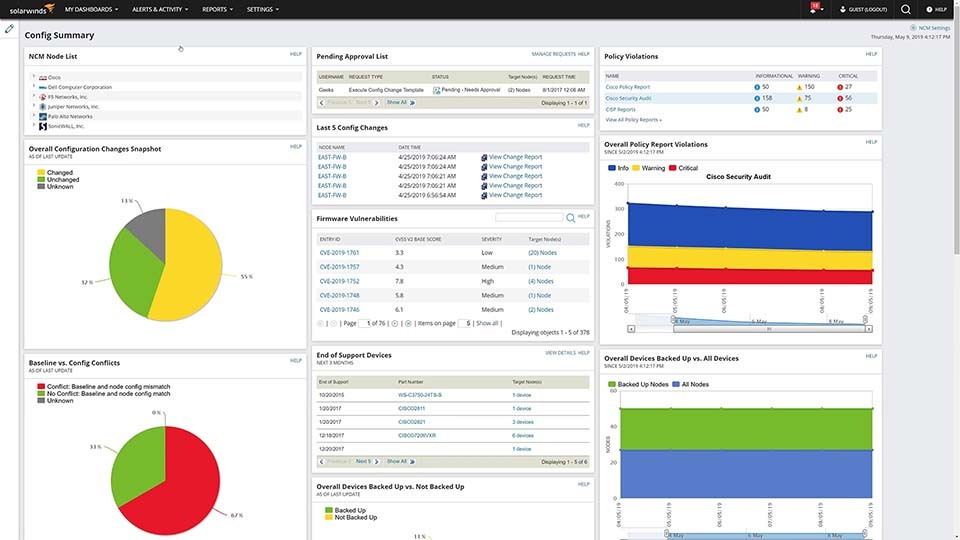
SolarWinds Network Configuration Manager is built to provide real-time change alerting and notify you every time a configuration is changed. You can easily see who made the change and when, with the ability to more easily roll back bad config changes as needed.
Critical devices or applications can experience more uptime when configuration changes are correct, and more uptime can also help improve productivity.
NCM is built to help you fix bad configs with minimal network downtime with the ability to quickly replace bad configurations or fix unauthorized changes using the last known good configuration from the archives. You can also search for and schedule automatic network backups of device configurations according to your preferred frequency.
Adhering to security policies is often a frustrating task when it comes to configuration management and change control.
SolarWinds Network Configuration Manager includes vulnerability detection, real-time configuration change monitoring, compliance assessments, reports for security standards like DISA STIG, NIST FISMA, PCI DSS, HIPAA, and more to help you more easily determine compliance with security policy requirements. NCM is also built to help you identify and close security gaps in the network, and ensure configurations and changes follow both internal and external policies.
Network change management is the process through which organizations standardize the way they implement network changes. The goal is to create an approach where making necessary changes to network devices causes as little disturbance to the existing systems as possible.
Network changes may be proactive efforts to improve the network or reactive responses to problems within the system. The network change management process is meant to ensure standardized approaches and reduce the frequency and impact of related incidents caused by the change, so changes are both prompt and efficient.
These basic tenets are true of any kind of change management. Since network change management is intimately related to network configuration management, the network change management process has a greater focus on monitoring and managing configuration changes rather than managing software updates and patching.
A network’s configurations define its flow, operation, and control. These configurations are essential to the functioning of the components of a network. Config changes can be authorized or unauthorized, and they can either work or they can create errors. Network change management helps ensure the configuration changes made are authorized and work without a problem. As with regular change management, the goal of network change management is to have zero downtime and zero interruption to network system functions.
A network change management tool can monitor any type of network change that occurs within an organization. These network changes typically fall into one of three major categories that range from routine to critical, which are:
These types of changes can be monitored by a network change management tool to make sure they’re authorized and help ensure if they’re not completed successfully, it’s possible to remediate the situation as quickly as possible. By using configuration change management software to automate backups, you can ensure if a change is not correct, it’s possible to use the backup to quickly return the device to the last functional configuration saved.
Network change management is critically important for maintaining network reliability and avoiding security vulnerabilities caused by unauthorized or failed changes.
Changes are an important and ever-present part of any network, no matter its size. Manual change and configuration management is time-consuming and prone to error. In ever-growing, multi-vendor device environments, manual configuration management can also slow staff productivity.
Investing in a quality network change management software can improve network performance by helping you reduce troubleshooting time. There are also many other important benefits to using network change management software. For example, network change control tools are built to help make it easier to track current and past configuration changes. So, when a change causes a problem in the network, you can more easily locate exactly where and when that change occurred with the ability to quickly restore to a previously backed up configuration.
The ability to see exactly when and where changes occurred—and who made them—is important for more than troubleshooting. It can also help protect your network from security vulnerabilities. A problematic configuration change can inadvertently make your network vulnerable to a cyberattack, and an unauthorized config change may also intentionally create a security risk. With configuration change management software alerting you to changes, you can fix problematic changes within minutes—significantly reducing your risk of cyberthreats.
Additionally, network change management can help you ensure your configuration changes comply with regulations. Adherence to internal and external security policies requires continuous monitoring and assessment. With a quality network change management tool, you get real-time configuration change monitoring and vulnerability scanning, and you can generate compliance assessment reports to help you ensure configuration changes are compliant with both internal and external regulations.
SolarWinds Network Configuration Manager includes an array of features making it much more than just a powerful network change management tool.
Some of the features in NCM include the ability to:
One of the most important features of Network Configuration Manager is its network inventory software. With this feature, NCM can automatically create and maintain an up-to-date inventory of your network devices, so you know exactly what devices are operating, their locations, and reliable device data to help you make informed decisions.
Additionally, because NCM is built on the SolarWinds Orion® Platform, the tool is designed to integrate seamlessly with other SolarWinds tools, so you can gain deeper insights across your entire network.
Network change management is the process through which organizations standardize the way they implement network changes. The goal is to create an approach where making necessary changes to network devices causes as little disturbance to the existing systems as possible.
Network changes may be proactive efforts to improve the network or reactive responses to problems within the system. The network change management process is meant to ensure standardized approaches and reduce the frequency and impact of related incidents caused by the change, so changes are both prompt and efficient.
These basic tenets are true of any kind of change management. Since network change management is intimately related to network configuration management, the network change management process has a greater focus on monitoring and managing configuration changes rather than managing software updates and patching.
A network’s configurations define its flow, operation, and control. These configurations are essential to the functioning of the components of a network. Config changes can be authorized or unauthorized, and they can either work or they can create errors. Network change management helps ensure the configuration changes made are authorized and work without a problem. As with regular change management, the goal of network change management is to have zero downtime and zero interruption to network system functions.
A network change management tool can monitor any type of network change that occurs within an organization. These network changes typically fall into one of three major categories that range from routine to critical, which are:
These types of changes can be monitored by a network change management tool to make sure they’re authorized and help ensure if they’re not completed successfully, it’s possible to remediate the situation as quickly as possible. By using configuration change management software to automate backups, you can ensure if a change is not correct, it’s possible to use the backup to quickly return the device to the last functional configuration saved.
Network change management is critically important for maintaining network reliability and avoiding security vulnerabilities caused by unauthorized or failed changes.
Changes are an important and ever-present part of any network, no matter its size. Manual change and configuration management is time-consuming and prone to error. In ever-growing, multi-vendor device environments, manual configuration management can also slow staff productivity.
Investing in a quality network change management software can improve network performance by helping you reduce troubleshooting time. There are also many other important benefits to using network change management software. For example, network change control tools are built to help make it easier to track current and past configuration changes. So, when a change causes a problem in the network, you can more easily locate exactly where and when that change occurred with the ability to quickly restore to a previously backed up configuration.
The ability to see exactly when and where changes occurred—and who made them—is important for more than troubleshooting. It can also help protect your network from security vulnerabilities. A problematic configuration change can inadvertently make your network vulnerable to a cyberattack, and an unauthorized config change may also intentionally create a security risk. With configuration change management software alerting you to changes, you can fix problematic changes within minutes—significantly reducing your risk of cyberthreats.
Additionally, network change management can help you ensure your configuration changes comply with regulations. Adherence to internal and external security policies requires continuous monitoring and assessment. With a quality network change management tool, you get real-time configuration change monitoring and vulnerability scanning, and you can generate compliance assessment reports to help you ensure configuration changes are compliant with both internal and external regulations.
SolarWinds Network Configuration Manager includes an array of features making it much more than just a powerful network change management tool.
Some of the features in NCM include the ability to:
One of the most important features of Network Configuration Manager is its network inventory software. With this feature, NCM can automatically create and maintain an up-to-date inventory of your network devices, so you know exactly what devices are operating, their locations, and reliable device data to help you make informed decisions.
Additionally, because NCM is built on the SolarWinds Orion® Platform, the tool is designed to integrate seamlessly with other SolarWinds tools, so you can gain deeper insights across your entire network.
Network Configuration Manager
Improve network reliability with change control monitoring, alerting, quick configuration rollbacks, and automatic backups.
Reduce configuration errors using deployment automation.
Improve network security using IOS vulnerability scanning and NIST FISMA, DISA STIG, and PCI DSS compliance assessments.