- Events
-
Partners
- Government
- Customer Portal
- Contact Us
- Contact Sales
-
English
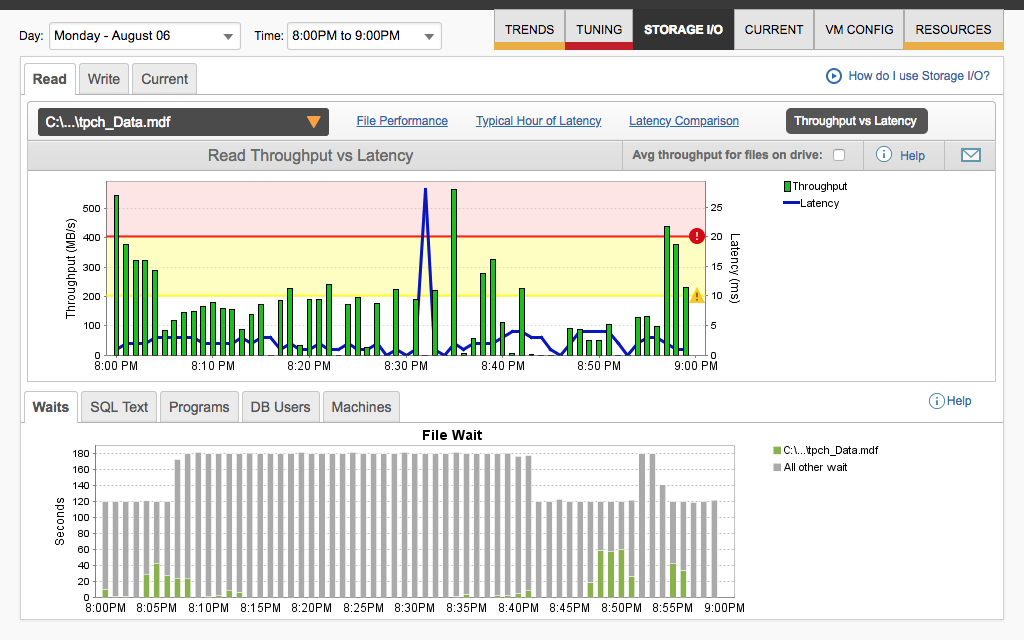
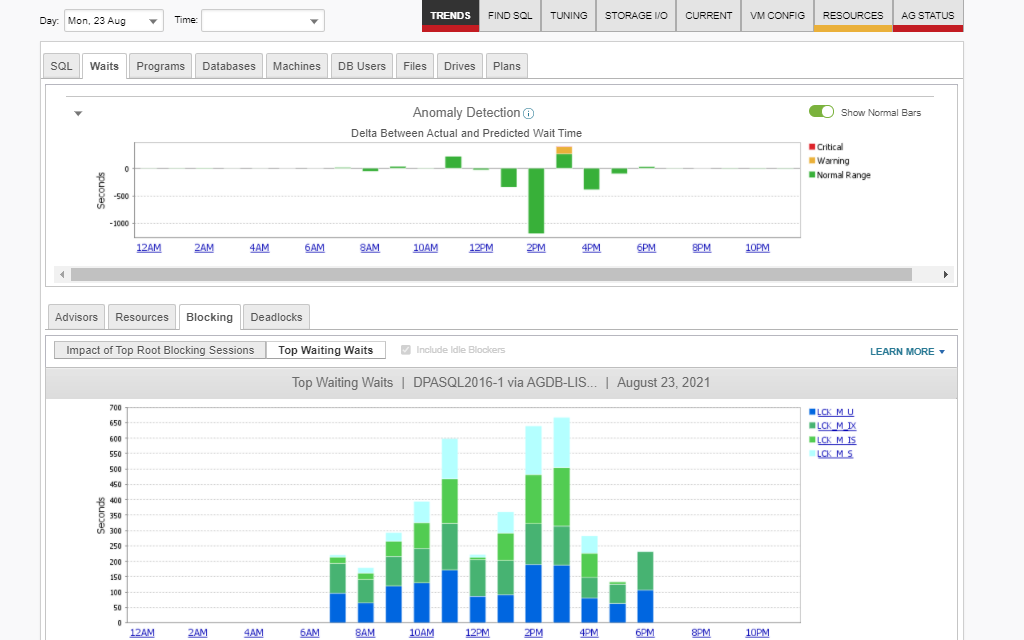
Database development monitoring is crucial to the database development process. SolarWinds® Database Performance Analyzer (DPA) doesn’t just detect and alert users to database issues—it’s built to diagnose database problems by helping you identify root causes and better understand the source of blocking, database inefficiencies, database anomalies, or unusual index patterns. With continual SQL statement performance data, developers can focus on queries ranked by response time. With these insights, teams can better analyze development and design flaws to make necessary changes.
Collaboration is an essential part of any development project. Database Performance Analyzer is designed to allow for fuller visibility and accountability across developers, DBAs, and server teams. With DPA, you can streamline the database development cycle thanks to better insights into systems. As you build, test, and deploy code and standards, DPA supports cross-team communication by providing read-only access to database query performance on production and staging servers to help speed up the development cycle.
The more information you have about performance before fully deploying a new database, the better prepared you are for whatever challenges you may encounter. You can ensure optimal database functionality by including application performance in the development cycle.
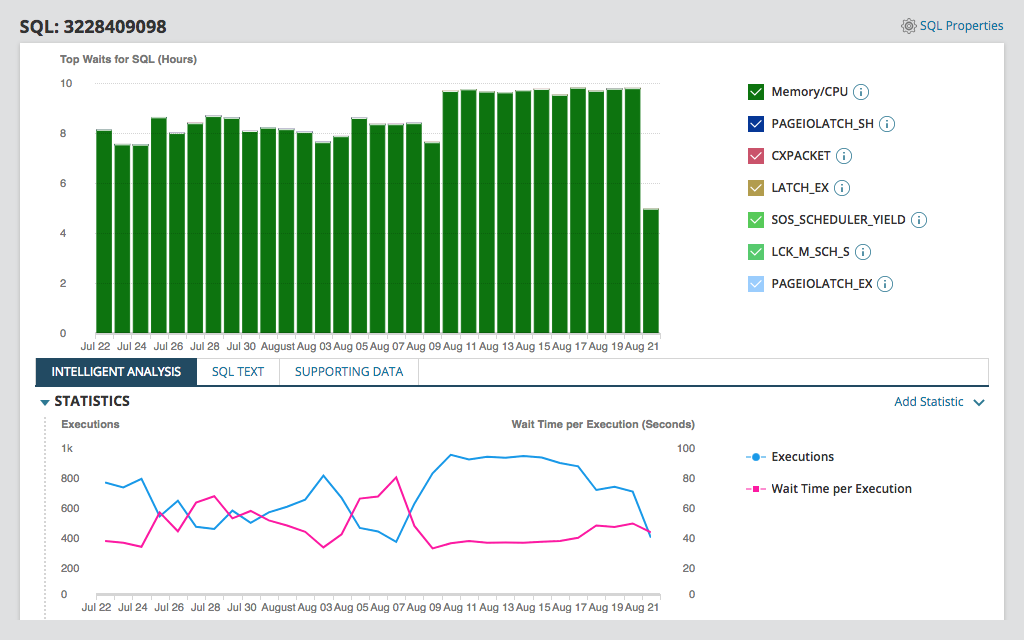
But why wait until the deployment phase to understand performance? With a less than 1% load on development, test, and production servers, DPA allows developers to observe how queries perform within a production database. DPA also offers response-time analysis, which can help allow for more efficient code and indexes, potentially avoiding database performance issues down the line.
DPA allows you to leverage continual insights into bottlenecks, root blockers, and dependency mapping for smarter database development and management. Resource provisioning matters during the database development process, and by using DPA, you can better align resource use with actual performance metrics. Better insights mean potentially avoiding unnecessary infrastructure additions and more confident hardware, when needed. DPA can also allow you to automate and schedule routine tasks, so human effort can go towards more specialized activities.
The database development process is a series of steps through which a database is created. It involves obtaining and analyzing real-world requirements, designing the data, functions, and schema of the database system, and finally implementing the system and its operations. Through the steps of the database development process, database application development monitoring plays a crucial role. Monitoring helps ensure the development process goes smoothly.
The basic stages of the database development process are:
Planning: Arguably the most important stage of the database development process is planning. During this stage, you determine the framework and requirements for the database you’re developing. You also need to create a timeline for the development that matches the scope of your project.
Analysis: The analysis stage, an extension of the planning stage, is when you take a closer look at how you will carry out your database development process. You put forth the plan you designed in the previous stage and scrutinize it to find and address any potential loopholes or discrepancies that could interfere with the database development process.
Design: The design stage is where the plan and analysis stages are finally implemented and the database program itself is designed. There’s often some trial and testing in this stage where the developers might make the database available on a limited basis to try to assess its function and identify any necessary modifications. A database development tool can help during these trial runs to identify potential issues or ensure correct functionality.
Implementation and Maintenance: Success in the implementation stage depends on the use of a quality database monitoring tool to help identify errors as they inevitably occur. Monitoring is essential to ensuring your work was worthwhile, and the database continues to function effectively.
Database development tools allow developers and DBAs to identify performance issues, collaborate across teams, and test and deploy solutions. In fact, database development requires tools for in-depth performance insights to identify issues.
Without the right tools and communication between departments, issues can pile up for too long. Bottlenecks, errors, and performance issues can take valuable time to understand and address. Without tools to keep you aware of issues as they arise, you might find yourself implementing stopgap solutions—like using untested code or implementing unnecessary hardware—as a temporary solution, instead of properly reconfiguring the database. This can result in the breakdown of the database you worked to develop. By engaging in constant database application development monitoring, a database development tool can help ensure you’re aware of issues as they arise and have the tools you need to address them fast instead of waiting until it’s too late.
One of the biggest ways a database development tool can help with the DB development cycle is by helping you identify underlying issues at the root of the problems. By making it easier to detect issues and understand the source of blocking, database anomalies, database inefficiencies, and unusual index patterns, the tool helps you address the problems quicker and keep them from occurring in the future. By helping you address problems quickly, a database development monitoring tool can help prevent problems building up.
Another major way DB development tools can help with the database development cycle is by making it easier to collaborate across teams, allowing for full visibility and accountability. When everyone is on the same page, it’s easier to identify and address issues—and to make proactive improvements to database performance in the long run.
SolarWinds Database Performance Analyzer comes with built-in database development monitoring functionality. DPA is designed to help you make developing and maintaining the performance of databases simple.
DPA can let developers, DBAs, and server teams have visibility and accountability across the development cycle to help ensure everyone is on the same page and potential hiccups and points of confusion are eliminated as much as possible. This collaboration also makes it easier to ensure problems are addressed as soon as they’re detected, since the involved parties can be alerted and can start working together right away. The ability to collaborate is critical during stages of the database development cycle, from the initial planning to implementation and maintenance.
As a comprehensive database performance solution, DPA is designed to go beyond database development monitoring to help bring you insights into query and application performance within a production database. The tool is built to help you see root-cause insights, query response times, and underlying issues for databases in development. You can also leverage hardware recommendations to help with resource provisioning.
The database development process is a series of steps through which a database is created. It involves obtaining and analyzing real-world requirements, designing the data, functions, and schema of the database system, and finally implementing the system and its operations. Through the steps of the database development process, database application development monitoring plays a crucial role. Monitoring helps ensure the development process goes smoothly.
The basic stages of the database development process are:
Planning: Arguably the most important stage of the database development process is planning. During this stage, you determine the framework and requirements for the database you’re developing. You also need to create a timeline for the development that matches the scope of your project.
Analysis: The analysis stage, an extension of the planning stage, is when you take a closer look at how you will carry out your database development process. You put forth the plan you designed in the previous stage and scrutinize it to find and address any potential loopholes or discrepancies that could interfere with the database development process.
Design: The design stage is where the plan and analysis stages are finally implemented and the database program itself is designed. There’s often some trial and testing in this stage where the developers might make the database available on a limited basis to try to assess its function and identify any necessary modifications. A database development tool can help during these trial runs to identify potential issues or ensure correct functionality.
Implementation and Maintenance: Success in the implementation stage depends on the use of a quality database monitoring tool to help identify errors as they inevitably occur. Monitoring is essential to ensuring your work was worthwhile, and the database continues to function effectively.
Database development tools allow developers and DBAs to identify performance issues, collaborate across teams, and test and deploy solutions. In fact, database development requires tools for in-depth performance insights to identify issues.
Without the right tools and communication between departments, issues can pile up for too long. Bottlenecks, errors, and performance issues can take valuable time to understand and address. Without tools to keep you aware of issues as they arise, you might find yourself implementing stopgap solutions—like using untested code or implementing unnecessary hardware—as a temporary solution, instead of properly reconfiguring the database. This can result in the breakdown of the database you worked to develop. By engaging in constant database application development monitoring, a database development tool can help ensure you’re aware of issues as they arise and have the tools you need to address them fast instead of waiting until it’s too late.
One of the biggest ways a database development tool can help with the DB development cycle is by helping you identify underlying issues at the root of the problems. By making it easier to detect issues and understand the source of blocking, database anomalies, database inefficiencies, and unusual index patterns, the tool helps you address the problems quicker and keep them from occurring in the future. By helping you address problems quickly, a database development monitoring tool can help prevent problems building up.
Another major way DB development tools can help with the database development cycle is by making it easier to collaborate across teams, allowing for full visibility and accountability. When everyone is on the same page, it’s easier to identify and address issues—and to make proactive improvements to database performance in the long run.
SolarWinds Database Performance Analyzer comes with built-in database development monitoring functionality. DPA is designed to help you make developing and maintaining the performance of databases simple.
DPA can let developers, DBAs, and server teams have visibility and accountability across the development cycle to help ensure everyone is on the same page and potential hiccups and points of confusion are eliminated as much as possible. This collaboration also makes it easier to ensure problems are addressed as soon as they’re detected, since the involved parties can be alerted and can start working together right away. The ability to collaborate is critical during stages of the database development cycle, from the initial planning to implementation and maintenance.
As a comprehensive database performance solution, DPA is designed to go beyond database development monitoring to help bring you insights into query and application performance within a production database. The tool is built to help you see root-cause insights, query response times, and underlying issues for databases in development. You can also leverage hardware recommendations to help with resource provisioning.
Database Performance Analyzer
Identify key database development problems and their root causes
Collaborate across teams through the database development cycle
Improve database development with application performance insights