- Events
-
Partners
- Government
- Customer Portal
- Contact Us
- Contact Sales
-
English
Agentless monitoring is a less intrusive method of network observation using application-specific APIs and various network protocols, such as SNMP and WMI, to observe the overall performance of your network assets, such as servers and applications.

Network monitoring tools help track your overall network health by offering real-time information about your network components. These tools utilize two methods to capture performance metrics from your network devices. In the agent-based monitoring method, they install lightweight software, also known as the monitoring agent, on your network devices to track their uptime and performance. The monitoring agent is primarily responsible for capturing performance data from your infrastructure components (servers, applications, etc.) and sending it back to the monitoring tool for further analysis.
In the agentless monitoring approach, these tools utilize specific networking protocols (SNMP, WMI, etc.), application-specific APIs, or built-in monitoring agents to track the health of your network devices. This monitoring method doesn't require the installation of a dedicated or third-party monitoring agent on every network component, making it easier than the agent-based approach. There is no clear choice between monitoring methods, as each has certain advantages and disadvantages. You should consider your organization's requirements before choosing a particular monitoring approach.
For instance, if all the devices in your network are of the same type and use similar network protocols, then agentless monitoring can be a viable option. However, if you require granular visibility into your IT infrastructure, then agentless monitoring will be more useful. Ideally, opt for a monitoring tool providing both agent-based and agentless monitoring capabilities to observe your IT environment effectively.
Outlined below are some of the other key differences between agentless and agent-based monitoring:
Agentless monitoring allows you to seamlessly observe your infrastructure components' overall health and performance without installing the agent software. It helps you retrieve the performance metrics from various network components quickly. The agentless approach also helps reduce the cost and complexity of infrastructure operations and maintenance (O&M). Given these benefits, most monitoring solutions in the market are transitioning to agentless or providing support for both agent and agentless monitoring.
Outlined below are some of the scenarios when agentless monitoring can be helpful for your business:
Outlined below are some popular infrastructure assets that you can monitor in an agentless manner:
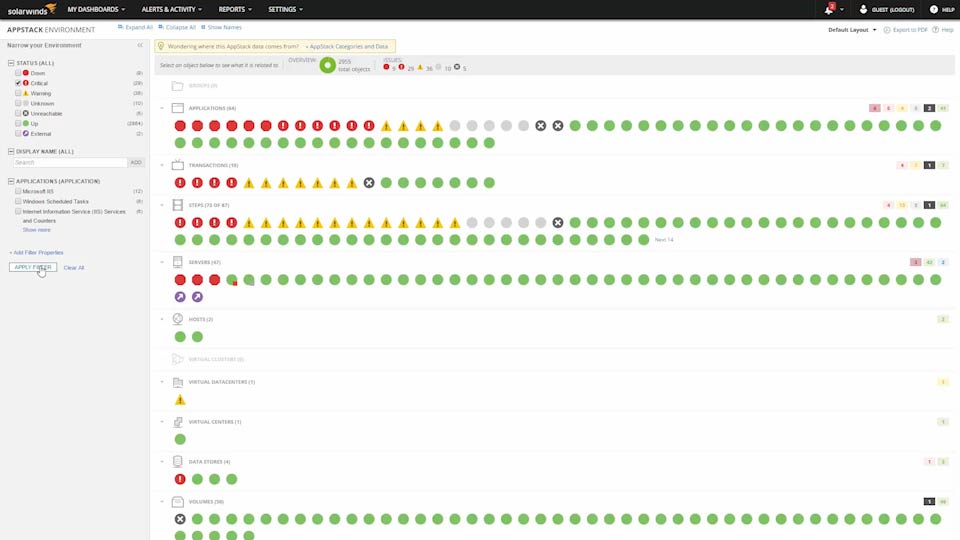
Modern network monitoring tools come with both agent-based and agentless monitoring capabilities to help you seamlessly observe your entire IT infrastructure, including on-premise, cloud, and hybrid applications. As an agentless monitoring tool, they utilize various protocols (SNMP, WMI, etc.) and rest APIs to quickly locate and observe the servers, applications, and other devices connected to your network. An agentless network monitoring tool can help you build an up-to-date network map to understand the complex relationship between your network components, including application dependencies. It also allows you to monitor your overall network health and identify key trends by analyzing key performance metrics on a unified dashboard, such as CPU utilization and network bandwidth.
Network management software with agentless monitoring capabilities can also provide timely alerts whenever a particular device or application surpasses a critical threshold. This helps you quickly identify and fix critical issues and avoid unexpected network outages. You can set up these alerts based on various metrics such as CPU utilization, packet loss rate, and response time. An agentless monitoring tool can also offer customized, data-rich reports to help you closely track and compare your network performance over specific time intervals. It also allows you to effectively monitor your virtualized resources, such as virtual servers and SaaS applications, by gathering their performance metrics through cloud APIs.
Advanced agentless monitoring tools enable you to utilize predefined templates and create custom workflows to streamline the network performance management tasks. These tools can also help you maintain an up-to-date IT asset inventory by offering real-time information about all the devices connected to your network. The inventory lists created by these tools update automatically whenever a device joins or leaves your network. Additionally, you can use these tools to view critical details about your network hardware and software for improved inventory lifecycle management, such as purchase date and warranty expiration date.